
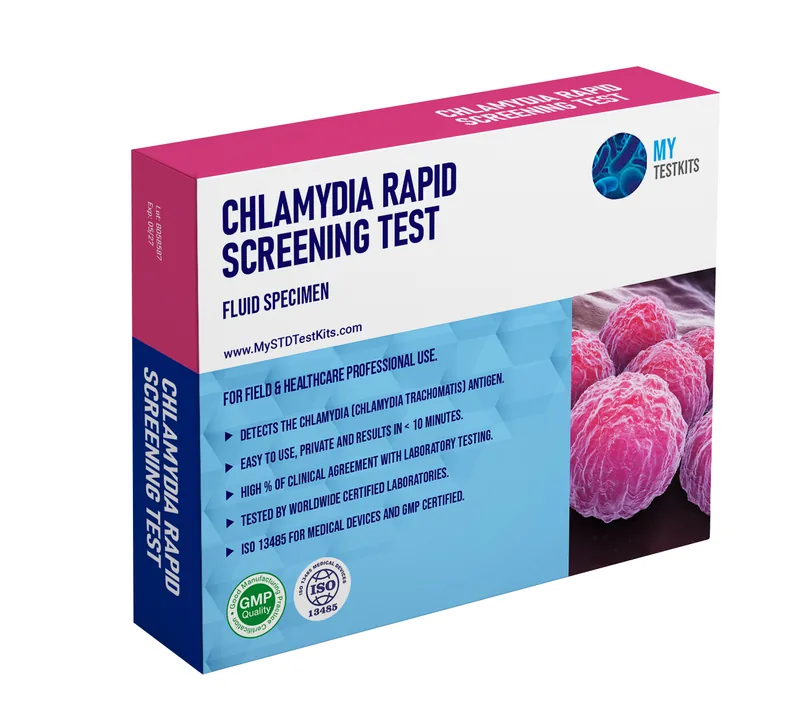
Chlamydia Rapid Screening Test Kit
Private, rapid home screening for one of the most common STIs.
from $39.95View kit
Private at-home screening
Rapid, confidential screening kits for common STIs, manufactured to ISO 13485 and GMP standards. No clinic visit, no waiting room, no mailing a sample to a lab.
Pick a single-infection kit or the Multi-STD pack based on your risk and symptoms.
Follow the simple included instructions — no clinic visit and no sample mailed to a lab.
See your on-site result in under 10 minutes. Confirm any positive result with a licensed healthcare provider.
Certain situations raise the likelihood of exposure to an STI. If any of these sound familiar, screening can offer clarity.
Sex without a condom or other barrier method increases the chance of exposure.
If you're unsure of a partner's status or history, screening can offer peace of mind.
Sharing needles or injection equipment carries a meaningful risk of bloodborne infection.
Contact with blood or other body fluids, including in a workplace setting, may warrant screening.
Answer a few short questions about your symptoms and exposure to get personalized insight on which kit may help and when to seek in-person care.
This tool is informational only and does not provide a diagnosis.
Every kit is manufactured to ISO 13485 and GMP standards. Multi-kit discounts apply on single-infection kits — mix and match to build the screening you need.
Private, rapid home screening for one of the most common STIs.
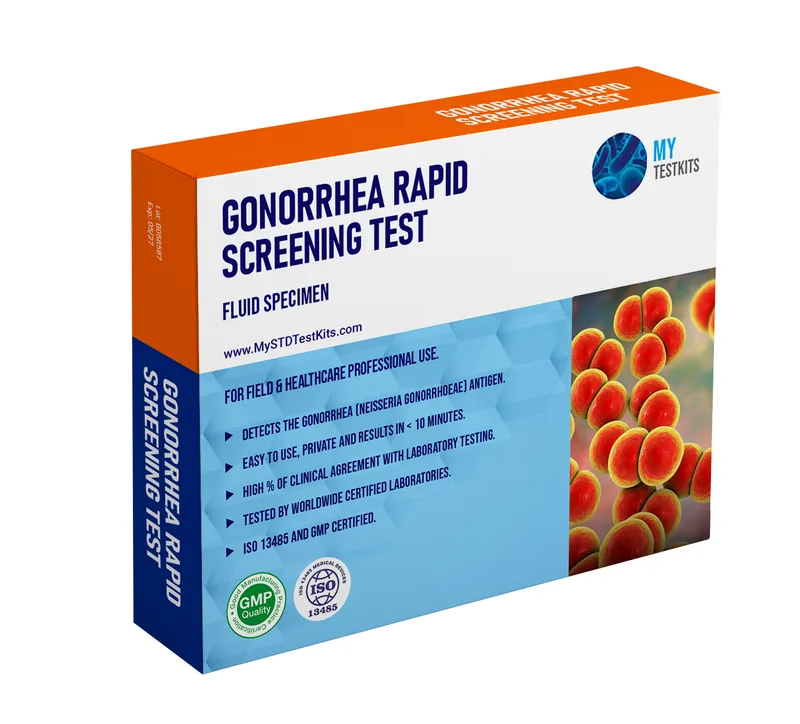
Fast, discreet home screening with results in minutes.
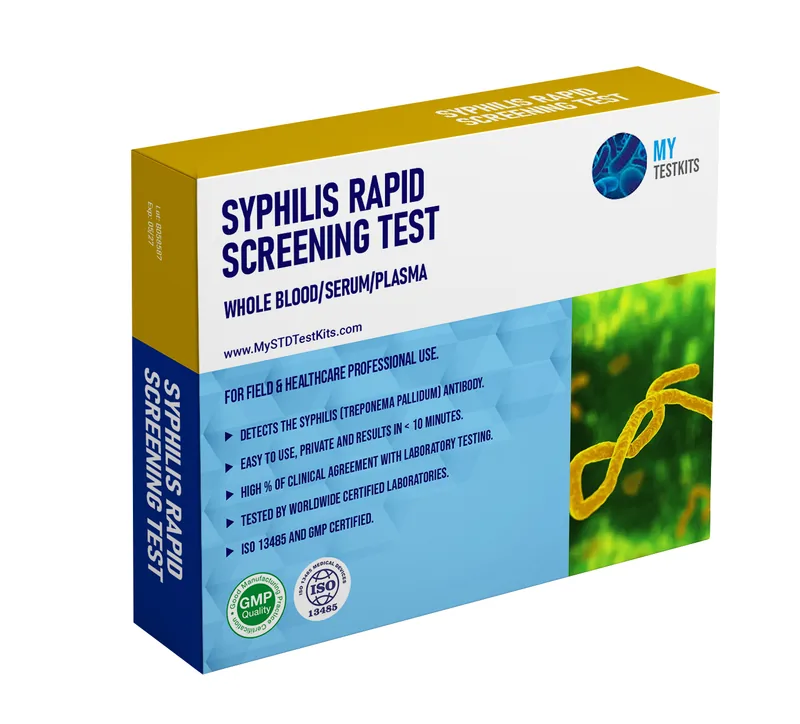
Rapid home screening for early detection and peace of mind.
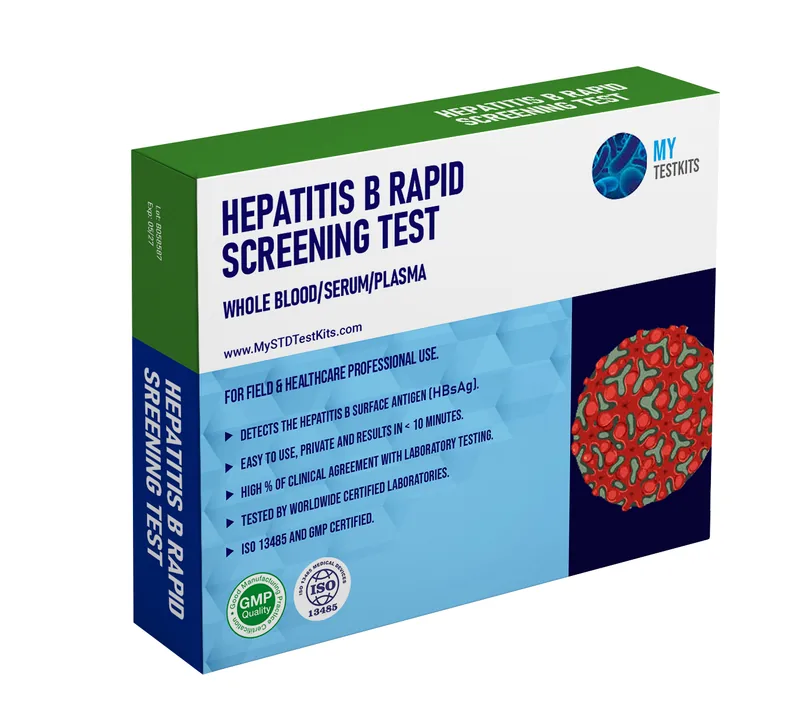
Confidential home screening for the Hepatitis B virus.
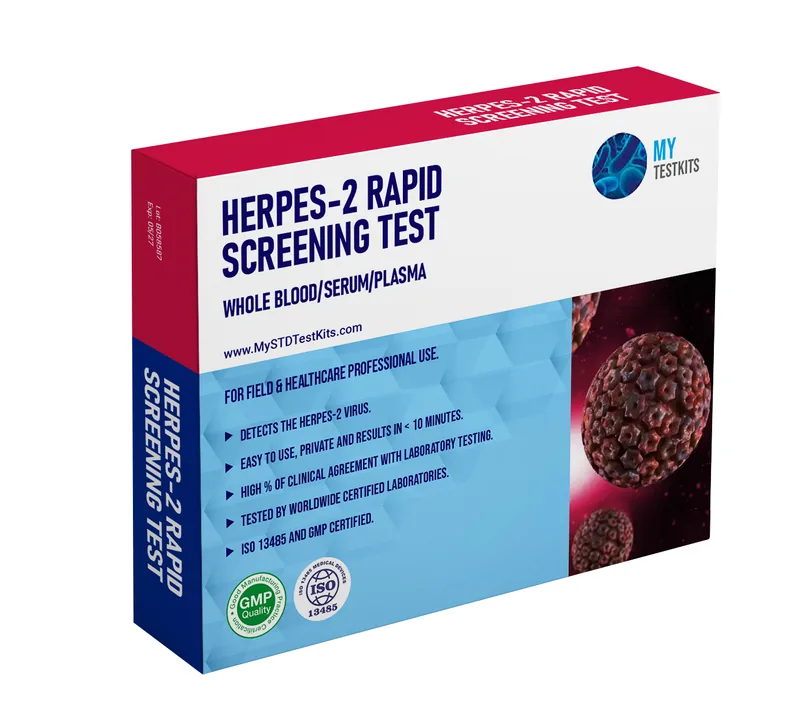
For those with symptoms or a known exposure — discuss results with a clinician.
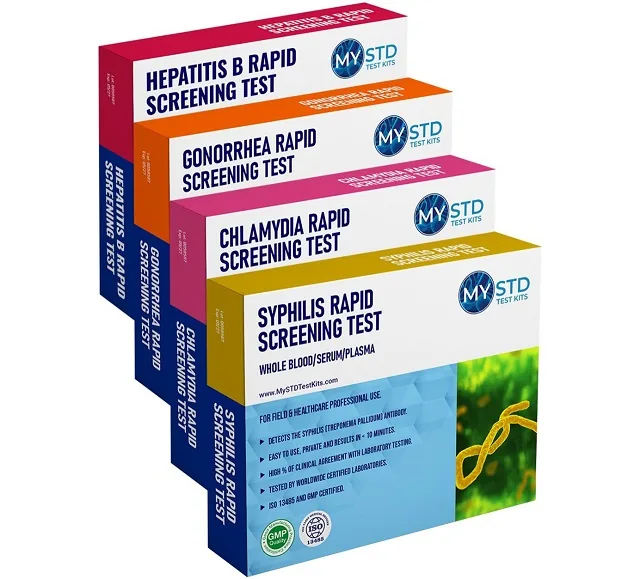 Best value
Screen for four common STIs — Chlamydia, Gonorrhea, Syphilis, and Hepatitis B — in one discreet pack.
For many people the barrier to getting screened isn't willingness — it's the clinic. Rapid at-home screening removes the friction that keeps people from finding out where they stand.
No waiting room, no front-desk conversation, no result sitting in a clinic system. You screen in private and read the result yourself.
A rapid screening kit gives an on-site result in minutes, instead of booking an appointment and waiting days for a lab report.
No time off work, no travel, no scheduling — screen when it suits you.
A screening result helps you decide whether to seek confirmatory testing and care, sooner rather than later.
Rapid screening is a first-line check, not a replacement for medical care. Any positive result should be confirmed by a licensed healthcare provider.
"Testing" covers several different things. Knowing the difference helps you choose the right first step — and understand what a result does and doesn't tell you.
Rapid at-home screening is the fastest, most private way to get an early indication. Lab and clinic testing remain the gold standard for a confirmed diagnosis — which is why we always recommend confirming a positive screening result with a healthcare provider.
Sources: CDC · Medically reviewed by [Reviewer Name, Credentials] — pending.
Screening too early is the most common cause of a false-negative result. Every infection has a window period — the time after exposure before it can be reliably detected. Use these as general guidance, not exact cut-offs.
Reliably detected from about 1–2 weeks after exposure.
General guidanceReliably detected from about 1–2 weeks after exposure.
General guidanceBlood-based detection reliable from about 3–6 weeks; repeat a negative early result at around 3 months.
General guidanceTypically detectable within a few weeks of exposure; discuss timing with a provider.
General guidanceAntibody detection can take 6–16 weeks; most useful when you have symptoms or a known exposure, and results should be discussed with a clinician.
General guidanceRapid screening kits detect antigens or antibodies, and timing can vary by kit and person. If you screen inside the window period and get a negative result, retest after it passes. These windows are general guidance based on CDC recommendations — confirm the right timing for your situation with a healthcare provider.
Sources: CDC · Medically reviewed by [Reviewer Name, Credentials] — pending.
A common bacterial STI that often causes no symptoms. Untreated, it can affect fertility, which is why screening matters even without symptoms.
A bacterial STI that can affect the genitals, throat, and rectum, frequently without symptoms. Early detection helps prevent complications and onward transmission.
A bacterial STI that progresses in stages and is highly treatable when caught early. US rates have risen, making early screening more important than ever.
A viral infection affecting the liver that can become chronic. Many people have no symptoms, so screening helps identify infection early.
A common viral infection (HSV) that causes outbreaks in some people and none in others. Screening is most useful for those with symptoms or a known exposure — discuss results with a clinician.
Screening quality comes from how a kit is made and validated, not marketing claims. Here is exactly how ours are held to standard.
Every kit is produced under ISO 13485, the international quality management standard specific to medical devices.
Production follows GMP protocols for consistency, traceability, and quality control at every batch.
In manufacturer validation, kits showed 95–100% agreement with laboratory reference methods (ELISA / PCR), with agreement varying by infection. Screening results are not a diagnosis — false positives and false negatives are possible, and any result should be confirmed by a healthcare provider.
We know privacy matters. Every order is designed around it.
Orders ship in plain, unbranded packaging with no indication of contents.
Your order and personal details are kept private and are not shared.
Results appear on the kit itself in minutes — there is no sample to mail to a lab and no waiting for a report.
Reassuring — but if you screened inside the window period, retest after it passes. Keep up regular screening based on your risk.
A positive screen is not a diagnosis. Contact a licensed healthcare provider to confirm with laboratory testing and discuss treatment. Most STIs are treatable and many are curable — acting early protects your health and your partners'.
If the control line doesn't appear or the result is hard to read, the screen is invalid. Repeat with a new kit, following the instructions carefully.
MySTDTestKits is a US supplier of in-vitro STI/STD screening devices, with over 10 years supplying screening devices. Our mission is to reduce the barriers of cost, privacy, and convenience that keep people from screening — without compromising on manufacturing quality.
Read plain-English guides on symptoms, transmission, and prevention for each infection we cover.
For informational and educational purposes only — not medical advice. These are preliminary screening kits, not a diagnosis. Results may include false positives or false negatives. Always consult a licensed healthcare provider.