
Understanding Chlamydia Symptoms and Testing in the USA: Signs, Risks, and When to Get Tested
Learn the signs of chlamydia, when to get tested, and how a Chlamydia home test kit in the USA offers fast, private, and confidential sexual health screening from home.
Sexually transmitted infections (STIs) remain a significant public health concern across the United States, and Chlamydia is one of the most commonly reported infections. Despite its prevalence, many people are unaware they have it because symptoms often do not appear. This makes regular testing essential, especially for sexually active adults.
The good news is that modern testing options make it easier than ever to check your sexual health privately and confidently. A Chlamydia home test kit allows individuals to test discreetly from the comfort of their own homes, helping them take control of their health without the stress or inconvenience of scheduling an in-person appointment.
In this guide, we'll explore common Chlamydia symptoms, risks of untreated infection, when to get tested, and how at-home Chlamydia testing can provide a fast, confidential solution.
What Is Chlamydia?
Chlamydia is a common bacterial sexually transmitted infection caused by Chlamydia trachomatis. It can affect both men and women and is primarily spread through vaginal, anal, or oral sexual contact with an infected partner.
One of the biggest challenges with Chlamydia is that many infected individuals experience no symptoms at all. As a result, people may unknowingly transmit the infection to partners or develop complications before realizing they need treatment.
Fortunately, Chlamydia is treatable when identified early, making regular screening a crucial part of sexual health care.
Why Chlamydia Is So Common in the USA
Millions of Americans are diagnosed with Chlamydia every year. Healthcare professionals often refer to it as a "silent infection" because symptoms are frequently absent.
Factors contributing to its spread include:
• Lack of visible symptoms
• Delayed testing
• Multiple sexual partners
• Inconsistent condom use
• Limited access to routine screening
• Fear or embarrassment about STI testing
Because many individuals feel uncomfortable discussing sexual health concerns, private Chlamydia testing options have become increasingly popular.
Chlamydia Symptoms in Women
Many women with Chlamydia experience no symptoms. When symptoms do occur, they may include:
Unusual Vaginal Discharge
Changes in color, odor, or consistency of vaginal discharge may indicate an infection.
Burning During Urination
Pain or discomfort while urinating can be a common sign.
Pelvic Pain
Persistent discomfort in the lower abdomen or pelvis should not be ignored.
Pain During Sexual Intercourse
Some women experience pain during or after sex.
Bleeding Between Periods
Unexpected spotting or bleeding may occur.
Rectal Symptoms
If the infection affects the rectum, symptoms may include pain, discharge, or bleeding.
Chlamydia Symptoms in Men
Like women, many men with Chlamydia have no symptoms.
When symptoms develop, they may include:
Penile Discharge
A clear, white, or cloudy discharge from the penis.
Burning Sensation While Urinating
Pain during urination is one of the most common symptoms.
Testicular Pain
Swelling or discomfort in one or both testicles may occur.
Rectal Symptoms
Men may experience rectal pain, discharge, or bleeding if the infection affects the rectum.
Throat Symptoms
Although less common, oral exposure can lead to throat discomfort.
Can You Have Chlamydia Without Symptoms?
Yes.
In fact, a large percentage of Chlamydia infections cause no noticeable symptoms.
This means you can:
• Feel completely healthy
• Continue normal daily activities
• Unknowingly transmit the infection
• Develop complications over time
This is why healthcare experts recommend routine STI screening for sexually active individuals, even if they feel perfectly fine.
Risks of Untreated Chlamydia
Without testing and treatment, Chlamydia can lead to serious health complications.
For Women
Untreated Chlamydia may contribute to:
• Pelvic inflammatory disease (PID)
• Chronic pelvic pain
• Increased risk of ectopic pregnancy
• Fertility complications
For Men
Possible complications include:
• Epididymitis
• Testicular discomfort
• Reproductive health complications
For Everyone
Untreated infections can:
• Increase the risk of transmitting the infection to partners
• Raise susceptibility to other sexually transmitted infections
• Lead to ongoing inflammation and discomfort
Early testing plays a vital role in preventing these outcomes.
When Should You Get Tested for Chlamydia?
Testing is recommended if:
You Have Symptoms
Any unusual genital symptoms should prompt testing.
You Had Unprotected Sex
Testing can provide peace of mind and early detection.
You Have a New Sexual Partner
Regular screening is an important part of responsible sexual health.
Your Partner Tested Positive
If a current or recent partner has been diagnosed with Chlamydia, testing is strongly recommended.
Routine STI Screening
Many sexually active adults benefit from periodic STI screening, even without symptoms.
What Is a Chlamydia Home Test Kit?
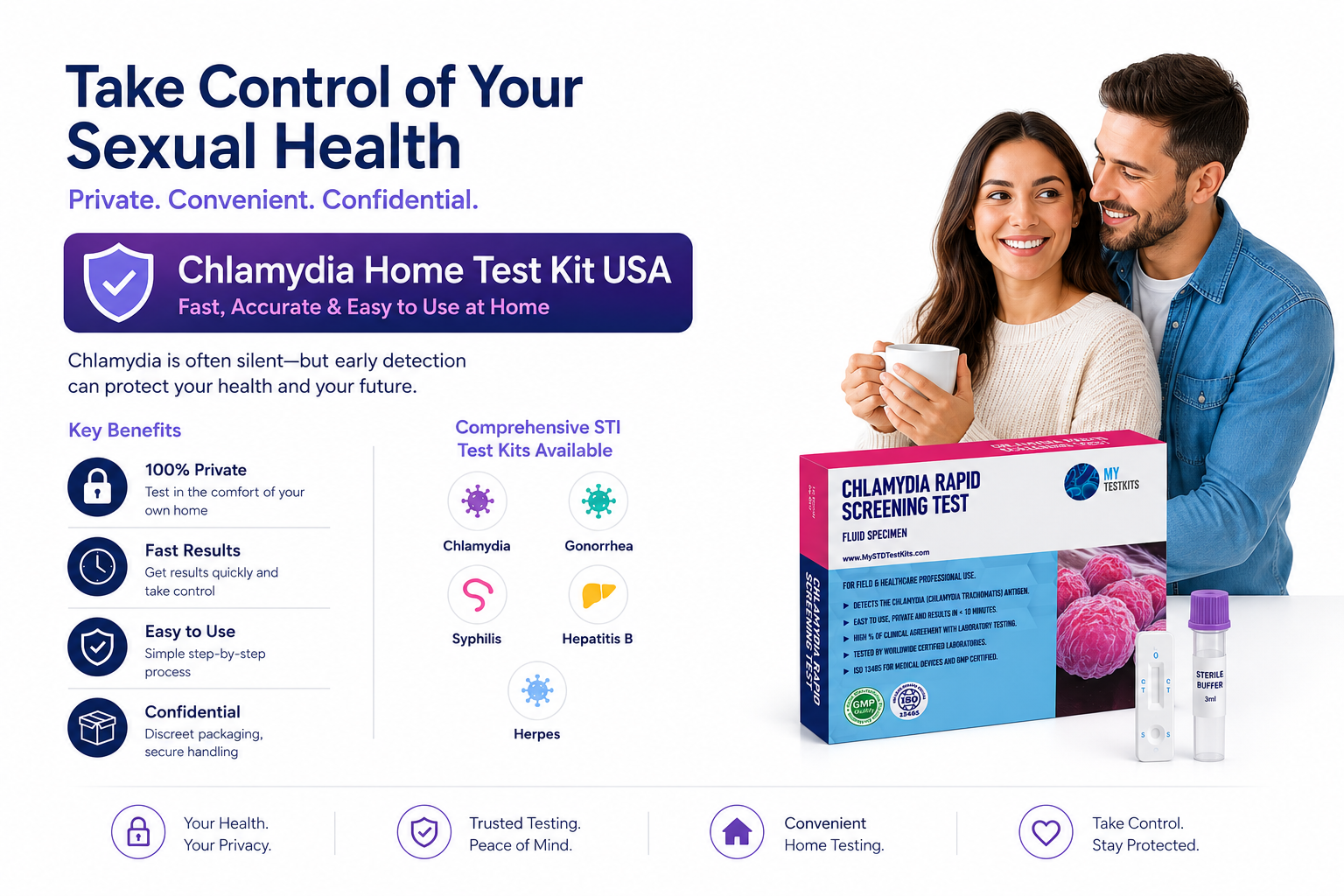
A [Chlamydia home testing kit](https://www.mystdtestkits.com/product/chlamydia-rapid-test-kit) is a private screening solution designed to help individuals check for infection without visiting a clinic.
These kits are intended for adults who value:
• Privacy
• Convenience
• Confidentiality
• Fast access to testing
Home testing empowers individuals to take proactive steps toward protecting their sexual health.
Benefits of Using a Chlamydia Home Test Kit USA
Complete Privacy
Many people delay testing due to embarrassment or fear of judgment.
A private Chlamydia test allows you to screen discreetly from home.
Convenience
No waiting rooms.
No appointments.
No travel.
Testing can fit into your schedule.
Fast Results
Modern home testing solutions provide rapid results, helping reduce anxiety and uncertainty.
Greater Control Over Your Health
Testing at home encourages regular monitoring and proactive healthcare decisions.
Increased Access to Screening
People in rural areas or those with limited access to healthcare facilities can benefit from at-home Chlamydia testing.
How At-Home Chlamydia Testing Works
The process is designed to be simple and user-friendly.
Step 1: Order Your Test Kit
Choose a trusted sexual health home testing solution.
Step 2: Follow the Instructions Carefully
Read all included instructions before beginning the test.
Step 3: Collect Your Sample
Depending on the test type, you may be asked to provide a sample according to the kit directions.
Step 4: Complete the Testing Process
Follow the provided instructions exactly to ensure accurate results.
Step 5: Review Your Results
Results are typically available quickly, helping you take the next appropriate step for your health.
Why Privacy Matters in Sexual Health Testing
Many people avoid STI testing because they worry about:
• Judgment
• Stigma
• Confidentiality concerns
• Privacy issues
A confidential Chlamydia testing solution allows individuals to prioritize their health while maintaining discretion.
Benefits include:
• Testing in a familiar environment
• Reduced stress
• Greater comfort
• Increased likelihood of routine screening
Taking care of your sexual health should feel empowering, not intimidating.
Comprehensive Sexual Health Screening Beyond Chlamydia
While Chlamydia is common, it is not the only STI that may affect sexual health.
Comprehensive screening may include testing for:
Gonorrhea
Another common bacterial STI that can produce symptoms similar to Chlamydia.
Syphilis
A bacterial infection that progresses through stages and can cause serious complications if left untreated.
Hepatitis B
A viral infection affecting the liver.
Herpes
A common viral infection that may cause recurring outbreaks or remain symptom-free.
Comprehensive sexual health screening helps provide a broader understanding of your health status.
Frequently Asked Questions (FAQ)
How common is Chlamydia in the United States?
Chlamydia is one of the most frequently reported sexually transmitted infections in the USA.
Can Chlamydia go away on its own?
No. Chlamydia requires proper medical evaluation and treatment.
Do I need symptoms to get tested?
No. Many people with Chlamydia experience no symptoms at all.
Is a Chlamydia home test kit private?
Yes. Home testing offers a discreet and confidential option for sexual health screening.
How often should sexually active adults get tested?
Testing frequency depends on individual risk factors, sexual activity, and healthcare provider recommendations.
Can I test for multiple STIs at once?
Many sexual health home testing solutions include screening options for Chlamydia, Gonorrhea, Syphilis, Hepatitis B, and Herpes.
Why is early testing important?
Early detection can help reduce the risk of complications and support timely medical care when needed.
Take Control of Your Sexual Health Today
Your sexual health deserves attention, care, and privacy.
Because Chlamydia often develops without symptoms, waiting for warning signs may delay detection. Regular screening helps you stay informed and make confident healthcare decisions.
With a private Chlamydia test, you can screen discreetly from home, avoid unnecessary stress, and take a proactive approach to protecting your health.
Worried About Chlamydia, Gonorrhea, Syphilis, Hepatitis B, or Herpes?
Choose a trusted sexual health home testing solution and get the answers you need with confidence, privacy, and convenience.
Take charge of your sexual health today with a confidential Chlamydia home testing kit and comprehensive STI screening from the comfort of your home.