
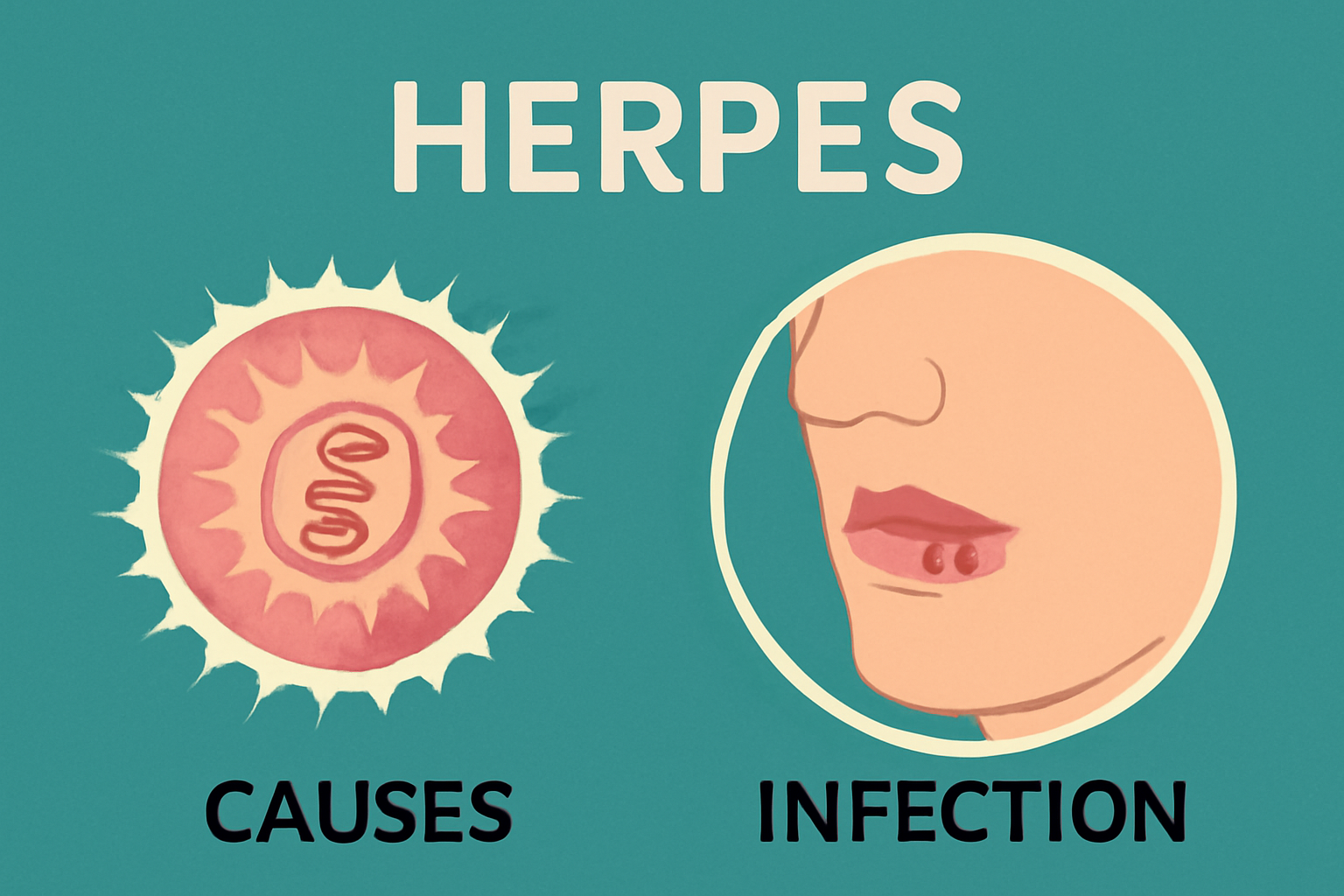
Herpes, All You Need to Know
In-depth educational content about herpes, a common sexually transmitted disease. Learn about its causes, symptoms, risks, testing, and treatment options, including self-testing with rapid test kits.
Herpes, Everything You Would Like To Know
Herpes is a common sexually transmitted infection (STI) caused by the herpes simplex virus (HSV). Although it is frequently contracted, many people are not aware that they have this disease because it causes no visible signs of illness in 80% of individuals infected with Herpes. Herpes is incurable, but it can be properly managed with medication.
In this post, we will talk about all things herpes: what it is, how you get it, the risks of infection, the signs that let you know something is wrong and how to test yourself for herpes as well as all sorts of treatments on offer these days. There are even self-test kits for men and women which give them more freedom. People can take control back over their sex life.
About Herpes
Herpes is an infection caused by two types of the herpes simplex virus:
HSV-1: Known simply as oral herpes, this virus produces cold sores around the mouth.
HSV-2: Causes genital herpes, often as a result of sexual contact with a person infected by HSV-2.
However, it can also be transmitted to this site from lesions on the face or fingers where someone has skin lining of mouth damaged even repeated exposure-an events engrained into folklore but unfounded in practice. The virus is transmitted through close skin contact during sexual relations. After a person is infected, HSV stays in the human body for life. It can hide out in nerve cells, but years later reactivate an outbreak--often provoked by stress, illness or when the immune system is in poor shape.
Infection/Risks
Herpes is easily spread and the risk of passing it on increases during an outbreak (when sores are visible or blisters present). But even in the absence of any symptoms, herpes can be transmitted from one person to another in a process called "asymptomatic shedding."
High-Risk Groups:
People who have sex. Especially those with multiple partners.
Risk Factors for Herpes Infection Either by intimate or sexual contact, men in particular may spread infection to their sexual partners.
Children: Kids often catch the virus from they are infants, and a terrible infection can cause them.
MSM:Prevalence of HSV-2 infection is higher among MSM, is particularly high.
Herpes also can raise the risk of getting or spreading other STIs, such as HIV.
Symptoms
Symptoms of herpes can vary from one person to another, from the timing at which recurrence symptoms appear and their severity. In many cases, people may experience no signs but still spread the virus to others.
Symptoms of Herpes Simplex Virus (HSV-1) Infection in Men and Women:
-
Groups of swollen blisters with fluid in the skin around the mouth, based on the site below the sores.
-
An itchy or burning sensation before sores develop in the genital area
-
Symptoms similar to influenza Breathing difficulties
Clinical Features of Genital Herpes (HSV-2)
Patients with diseases related to Genital Herpes (HSV-2), the picture is sad:
-
Painful sores and blisters near the anus
-
The skin feels itchy or burning
-
Painful urination
-
Symptoms similar to influenza, e.g. fever, enlarged lymph nodes
Asymptomatic Shedding:
Even if you do not have sores that are visible, the body can still be passing on the virus. Safe sex should be practiced, even if no symptoms are present, with this in mind.
Detection/Testing
Herpes infections usually can be pretty reliably made based on the clinical signs and symptoms of the patient along with laboratory test results. There are several ways to diagnose herpes:
PCR (Polymerase Chain Reaction) Test: A highly accurate test that can detect the virus's genetic information in a sample taken from a sore or blister.
Culturing a sample: This is where a sample is taken from a sore and the virus is grown in order to be found.It is a sort of prick testing for the virus, although it is less frequently used today due to more precise tests.
Blood tests are able to diagnose genital herpes even with no connection to health complaints: they search for antibodies against HSV-1 or HSV-2. These essentially indicate bygones of the disease infecting you.
Rapid Test Kits for Self- TestingThe self-testing kits are less usual than other STI self-tests but with them, you can usually detect HSV antibodies in a blood sample in 5 minutes.
Home testing in an instant These tests can return results in minutes. For people who believe they may have been exposed to the virus, it's a private and convenient way to get tested. What you should know, however, is that blood testing for herpes only catches past exposures to the virus--not an active infection.If your self-test is positive, you need to go to a healthcare provider for the proof of these findings and suggestions.
Treatments
Currently, there is no cure for herpes. But antiviral medications like Acyclovir and drugs similar to it can help to soothe symptoms and shorten the duration of outbreaks and reduce likelihood of passing the infection on to others. The most commonly used antiviral drugs are:
Acyclovir
Valacyclovir
Famciclovir
These treatments work by halting the virus from replicating, getting you over the ailment more rapidly and with fewer outbreaks. Neglecting to take breaks from long-term suppressive therapy (years to routinely several months) might result in a build-up of virus resistant to the drugs and a gradual loss of effectiveness, though it will certainly lower probability that you'll have active sores when they are actually transmitted.
Topical treatments
Some types of antiviral drugs can be made into a cream, ointment or paste and applied to the sores. This alleviates pain for sufferers and can cut short healing time (especially if you take it when you feel tingling on the lip or at the first sigs of two lesions appearing within 24 hours). Oral tablets are more effective.
Lifestyle management
There’s no cure for herpes, but changes in lifestyle can reduce the number and severity of outbreaks.
Stress Management: Because stress can trigger herpes outbreaks, techniques for managing stress like relaxation, meditation or yoga may be useful.
Enhance the immune system: Eating well, exercising and getting enough sleep to keep healthy can support our bodies’ immune system and help stave off outbreaks.
Prevention
Herpes prevention is all about reducing the risk of transmission. Key strategies include:
Safe sex: When condoms are used correctly and consistently they can reduce virus transmission during sex.
Abstinence during outbreaks: It’s important not to have sex when you have sores or suspect they are coming, because this is the time when the virus is most likely to be passed on.
Informing your partner It is important that if you have herpes, you inform your sexual partners and warn them of the risks so they can take precautions themselves.
Daily antiviral medicine: For those who have repeated outbreaks, taking daily antiviral medicine can diminish the chance of infecting a partner with herpes.
Conclusion
Herpes is a common sexually transmissible disease of a chronic viral nature that can't be cured though treatments are available to suppress it and one can take steps to avoid outbreaks. If you think you may have herpes, early diagnosis with prompt treatment can help manage the virus and alleviate symptoms; it can also trim the odds that you will infect others.
But bear in mind - there is no cure for HSV-1. Spreading of the virus can also be intercepted by constant testing, using condoms and talking openly with partners about your sexual health.