
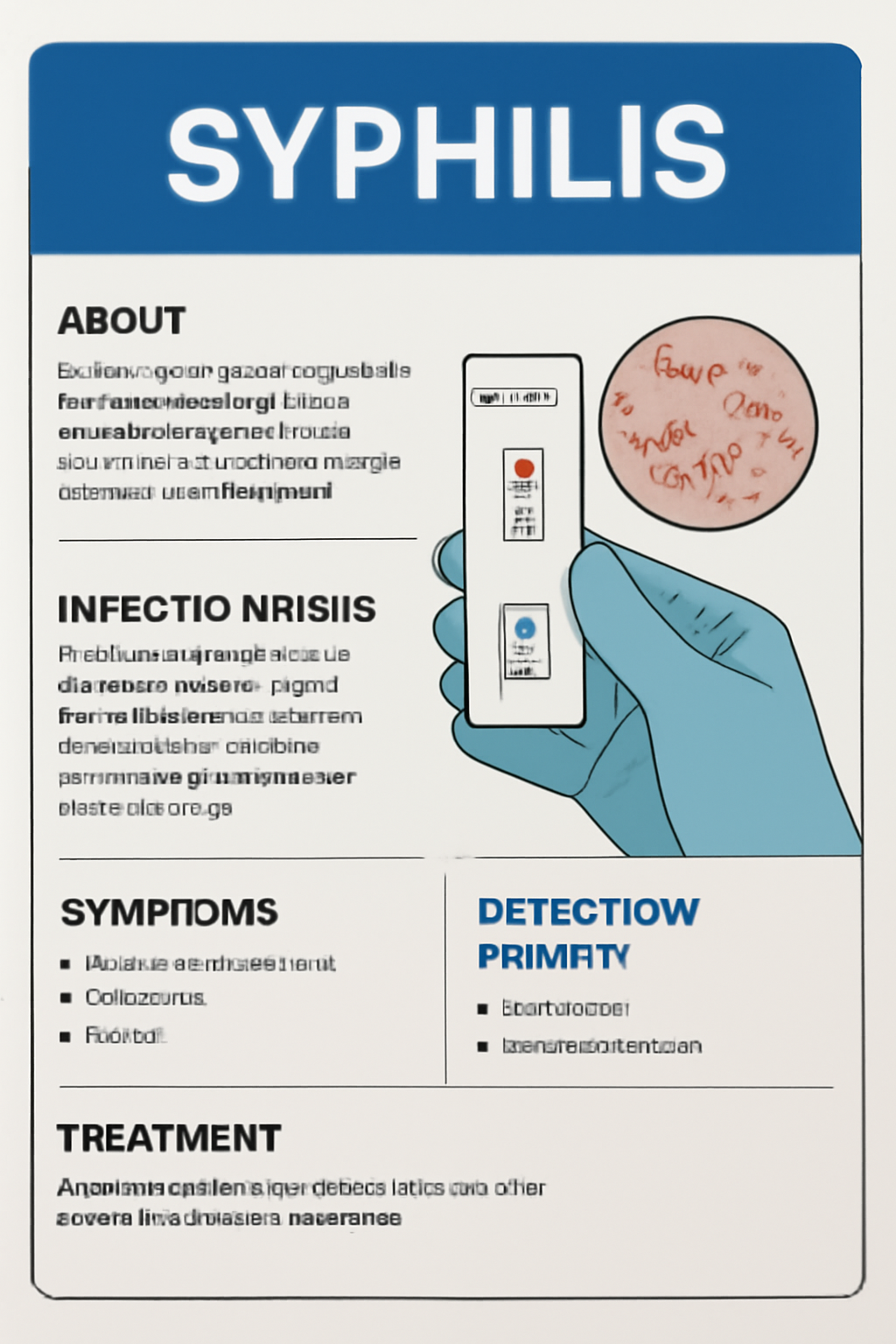
Syphilis, all you need to know
Syphilis is a sexually transmitted infection (STI) that can cause serious health problems if left untreated. This article covers everything you need to know about syphilis, including its risks, symptoms, diagnosis, and treatment options, with a focus on self-testing using rapid test kits.
Syphilis – all you need to know
syphilis is a sexually transmitted infection cause by bacteria. Though the infection can present with a variety of symptoms, it frequently goes underrecognized in its initial stages. Left untreated, syphilis can cause serious complications involving the heart, brain and other organs. In this article, we look at syphilis in more detail, analyzing the risks, symptoms, diagnosis and treatments available. We will also discuss the potential of self-testing at home, with rapid test kits.
About Syphilis
Syphilis is an infection caused by the bacterium Treponema pallidum. It is one highly contagious disease that can affect both males and females. Syphilis can spread through direct contact with syphilitic sores (chancres) during vaginal, anal or oral sex. It can also be transmitted from mother to baby during pregnancy or childbirth and cause congenital syphilis, which can be very serious or fatal.
The Four Stages of Syphilis
Syphilis progresses in four stages:
-
Primary Syphilis: The first stage is evidenced by an indurated, round, painless sore known as a chancre. It manifests at the point of contact, usually 3 weeks after exposure.
-
Secondary Syphilis: A rash, mucous membrane lesions and flu-like symptoms appear a few weeks after the chancre goes away. This phase may continue for weeks to months.
-
Latent Syphilis: Syphilis, if untreated will enter an un-symptomatic latent stage, but it is still present in the body. This phase can go on for years.
-
Tertiary Syphilis: The last stage develops in 15-30% of the untreated population. It can be very damaging to the heart, brain and nerves and can have life-threatening complications.”
Infection/Risks
Syphilis is most commonly spread through sexual activity with an infected individual. The following are some of the risk factors for acquiring syphilis:
-
Unprotected sex (vaginal, anal or oral)
-
Multiple sexual partners
-
Having a partner with syphilis or other STIs
-
Having sex with a person who has previous syphilis history or other STI’s
-
MSM: Men who have sex with men
The risk of passing syphilis on is greater in Primary and Secondary stages when there are sores or a rash.
Syphilis in Pregnancy
Syphilis may also be passed from a pregnant woman to her developing baby, resulting in congenital syphilis. This can lead to serious issues like preterm labour, developmental delays or stillbirth. Pregnant women should be tested for syphilis early in their pregnancy.
Symptoms of Syphilis
Symptoms of syphilis differ based on the stage at which an individual is infected.
Primary stage: A painless sore or ulcer most often found on the genitals, lower abdomen, anus, mouth. The sore resolves in 3 to 6 weeks without treatment.
Secondary stage: A rash can develop on the palms of your hands or the soles of your feet, as well as fever, enlarged lymph nodes, sore throat, muscle aches and extreme fatigue.
latent A stage in the progress of a disease in which there are no symptoms, but the causative bacteria or other infective organism continue to live and produce toxins or lesions that can develop the disease at any stage.
Tertiary Syphilis: In this stage, people can experience very severe problems such as heart, blood vessels, liver, bones and joints.
It should also be noted that syphilis can lie dormant for years, especially during its latent stages, so regular testing is essential for those who are sexually active.
Detection/Testing
Syphilis testing is important for early diagnosis and prevention of complications. These are the ways in which syphilis is typically diagnosed:
Blood Tests: The only way to know for sure if you have syphilis is by getting tested (i.e., a blood test) for the bacterium that causes it. Blood tests There are two kinds of blood tests that we use:
Nontreponemal tests: These screen for substances the body makes in reaction to syphilis infection.
Treponemal tests These detect antibodies that target only the Treponema pallidum bacteria.
Microscopy: The vagina sore can be scraped to collect a sample and observe it under the microscope for bacteria.
Self-Testing with Rapid Test Kits
Testing oneself for syphilis has gained popularity with the increasing availability of rapid tests that can be used at home. These are generally in the form of kits for collecting a blood sample with a finger prick and provide results after 15–30 minutes. Although self-testing offers convenience and privacy, it is critical that an individual seek confirmation and any necessary medical treatment by a healthcare provider.
You can find FDA-approved syphilis test kits to use at home, and there are a number of good brands. But keep in mind that negative results should not be considered binding, especially if you still have symptoms or the potential exposure is very recent.
For more information on syphilis testing and self-testing kits see the following:
-
CDC Syphilis Overview
-
World Health Organization: Syphilis
-
AIDS Healthcare Foundation: Syphilis Testing
Treatment for Syphilis
Syphilis can be cured with antibiotics (for example, penicillin) that will kill the bacteria, resulting in a cure if the damage done by the infection isn't too severe. Treatment Treatment may differ according to the stage of the disease:
Primary, secondary and early latent syphilis: A single injection of penicillin is enough.
Tertiary and Late Latent Syphilis: Long antibiotics regimens are necessary, and the harm from an infection may be irreversible.
It is important for sexual contacts of those with syphilis to be tested and treated to avoid reinfection. Regular tests for syphilis are also encouraged for people at higher risk of the disease.
Prevention
The most effective method to avoid syphilis is by practicing safe sex, such as:
-
Using condoms or dental dams every time you have sex
-
Sexually active person should be screened for STIs at the regular basis
-
Restricting number of sexual partners
-
Open discussion with sex partners about STI testing and prevention
If you think you might have syphilis or been in contact with someone who has, it is essential to see a doctor for diagnosis and treatment.
Conclusion
Syphilis is a dangerous STI that can cause serious health problems if it isn’t effectively treated. Prompt testing and antibiotic treatment, including with penicillin if found to be infected, can cure the infection and prevent complications. If you are sexually active — especially if you engage in high-risk behaviour — think about getting tested for STIs, including syphilis, regularly and check out at-home self-testing kits. But note: This article is for informative purposes only and is not medical or dietary advice. If you have any concerns about your health, please speak with your doctor.