
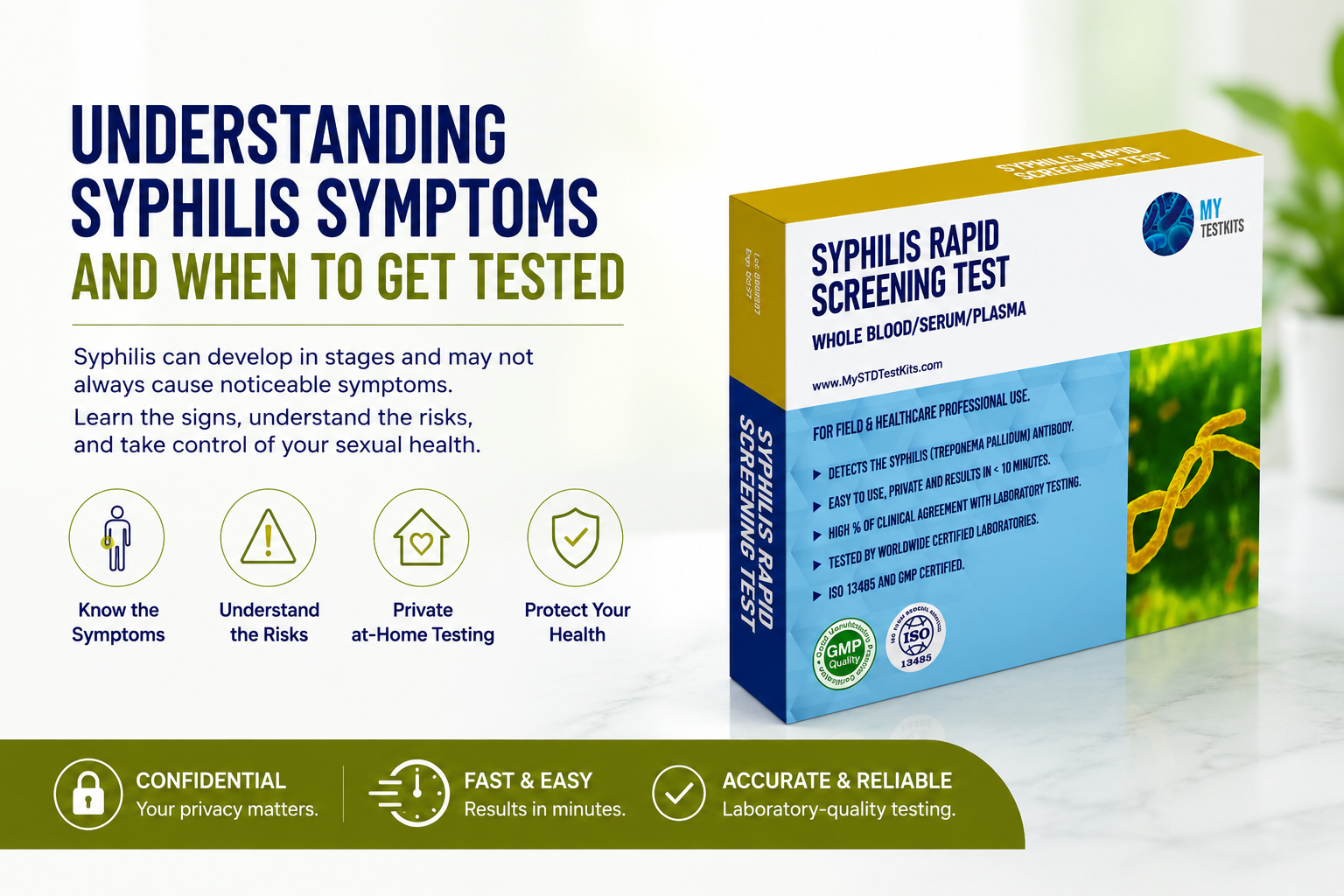
Understanding Syphilis Symptoms and When to Get Tested
Discover common syphilis symptoms, stages of infection, testing options, and the benefits of at-home syphilis screening. Learn when to get tested and protect your health.
Introduction
Syphilis is a sexually transmitted infection (STI) that has been increasing across the United States in recent years. While it is treatable when identified early, syphilis can be difficult to recognize because symptoms often appear in stages and may disappear temporarily without treatment.
Many individuals assume that the infection has gone away once symptoms fade, but the bacteria can remain active in the body and continue causing serious health complications over time.
Understanding the symptoms of syphilis and knowing when to get tested can help protect your health and prevent the spread of infection to others. With modern at-home screening options, getting tested is now more convenient and private than ever before.
What Is Syphilis?
Syphilis is a bacterial infection caused by Treponema pallidum. It spreads primarily through sexual contact with an infected person and can affect both men and women.
Without treatment, syphilis progresses through several stages, each with different symptoms and health risks.
The stages include:
• Primary Syphilis
• Secondary Syphilis
• Latent Syphilis
• Tertiary Syphilis
Because symptoms vary throughout these stages, testing is often the only reliable way to determine whether an infection is present.
How Does Syphilis Spread?
Syphilis is transmitted through direct contact with a syphilis sore (chancre) during:
Vaginal Sex
The infection can spread through contact with infected genital sores.
Oral Sex
Syphilis can infect the mouth, lips, and throat.
Anal Sex
The bacteria may spread through anal contact with infected sores.
Pregnancy
An infected mother can pass syphilis to her baby during pregnancy, potentially causing serious health complications.
Syphilis is not typically spread through:
• Casual contact
• Hugging
• Sharing utensils
• Toilet seats
• Swimming pools
Understanding the Stages and Symptoms of Syphilis
Primary Syphilis Symptoms
The first stage usually begins with one or more painless sores called chancres.
Common characteristics include:
• Small round sores
• Firm texture
• Usually painless
• Located on genitals, anus, rectum, lips, or mouth
These sores may heal on their own within several weeks, even without treatment.
Secondary Syphilis Symptoms
If untreated, syphilis can progress to the secondary stage.
Symptoms may include:
• Skin rash
• Fever
• Fatigue
• Swollen lymph nodes
• Muscle aches
• Headaches
• Sore throat
• Patchy hair loss
The rash may appear on:
• Palms of the hands
• Soles of the feet
• Trunk
• Arms and legs
Because these symptoms can resemble other illnesses, syphilis is often overlooked during this stage.
Latent Syphilis
During the latent stage:
• No visible symptoms may be present
• The infection remains in the body
• Individuals can remain unaware of infection for years
Testing becomes especially important because symptoms may completely disappear despite ongoing infection.
Tertiary Syphilis
Untreated syphilis can eventually lead to severe complications affecting:
• Brain
• Nervous system
• Eyes
• Heart
• Blood vessels
Although not everyone develops tertiary syphilis, the risk increases when infections remain untreated for long periods.
Why Early Detection Is Important
Early diagnosis offers several important benefits:
• Reduces risk of serious complications
• Helps prevent transmission to partners
• Allows prompt medical treatment
• Provides peace of mind
• Supports long-term sexual health
The earlier syphilis is identified, the easier it is to manage with appropriate medical care.
Risks of Untreated Syphilis
Untreated syphilis may lead to:
Neurological Complications
The infection can affect the nervous system and brain.
Potential symptoms include:
• Memory problems
• Coordination difficulties
• Vision issues
• Hearing loss
Cardiovascular Complications
Long-term infection may damage:
• Heart
• Blood vessels
• Circulatory system
Pregnancy Complications
Syphilis during pregnancy can increase the risk of serious complications for both mother and baby.
Who Should Consider Syphilis Testing?
Testing may be appropriate if you:
• Have a new sexual partner
• Have multiple sexual partners
• Have unprotected sex
• Learn a partner tested positive for an STI
• Notice symptoms associated with syphilis
• Want routine sexual health screening
Many infections occur without obvious symptoms, making regular testing an important part of preventive healthcare.
Benefits of At-Home Syphilis Testing
Privacy and Confidentiality
Many people prefer private syphilis testing because it allows them to screen discreetly from home.
Convenience
At-home testing eliminates:
• Travel time
• Clinic appointments
• Waiting rooms
Fast Access to Screening
Early screening helps individuals seek medical guidance sooner if needed.
Greater Comfort
Many people feel more comfortable testing at home than discussing sensitive concerns in a public setting.
How a Syphilis Home Test Kit Works
Step 1: Order Your Test Kit
Choose a trusted syphilis home test kit USA consumers can rely on.
Step 2: Read Instructions Carefully
Review all included directions before testing.
Step 3: Collect Your Sample
Follow the instructions provided with your testing kit.
Step 4: Complete the Test
Carefully perform the test according to manufacturer guidelines.
Step 5: Review Results
If results suggest a possible infection, contact a healthcare provider for further evaluation and treatment guidance.
Protecting Yourself From Syphilis
Helpful prevention strategies include:
• Regular STI screening
• Using condoms consistently
• Open communication with partners
• Prompt medical evaluation for symptoms
• Routine sexual health checkups
Frequently Asked Questions
Can syphilis occur without symptoms?
Yes. Many people experience no symptoms during certain stages of infection.
What does a syphilis sore look like?
Primary syphilis often causes a small, firm, painless sore called a chancre.
Can syphilis be treated?
Yes. Syphilis is treatable when diagnosed and managed appropriately by a healthcare provider.
Why is regular testing important?
Testing helps identify infections early, even when symptoms are absent.
Is at-home syphilis testing confidential?
Yes. Home testing provides a discreet and private screening option for individuals concerned about sexual health.
Take Control of Your Sexual Health Today
Syphilis can develop silently and progress through multiple stages before serious complications occur. Understanding the symptoms and getting tested at the right time can make a significant difference in protecting your long-term health.
A confidential syphilis home test kit offers a convenient and private way to screen from home, helping remove common barriers to testing.
If you're looking for a trusted syphilis home test kit USA residents can use with confidence, MYSTD TestKits provides convenient at-home screening solutions designed to support your sexual health journey.
Don't wait for symptoms to worsen. Take charge of your health, gain peace of mind, and prioritize early detection today.